Who, What, When, Where and Why: What Does an Access Coordinator Actually Do?
There are a lot of coordinators on a modern set these days. Sustainability coordinators. Intimacy coordinators. Mental health coordinators. And now, access coordinators. That's a lot of coordinating, but each of these roles exists for the same reason: productions have got more complex, and so has the job of making sure everyone on them is safe, supported, and able to do their best work.
As one of the participants in Screen Australia's first and only access coordinator cohort, the question I get asked most often isn't one question. It's five. Who are you? What do you do? When do we engage you? Where do you work? Why does this matter? If you're a producer, production manager, or anyone putting a crew together, these are fair questions. Budgets are tighter than ever, so adding another line to the call sheet is going to raise an eyebrow before it raises anything else. That's exactly why this post exists. So let's get into it: the Who, What, When, Where and Why of access coordination.
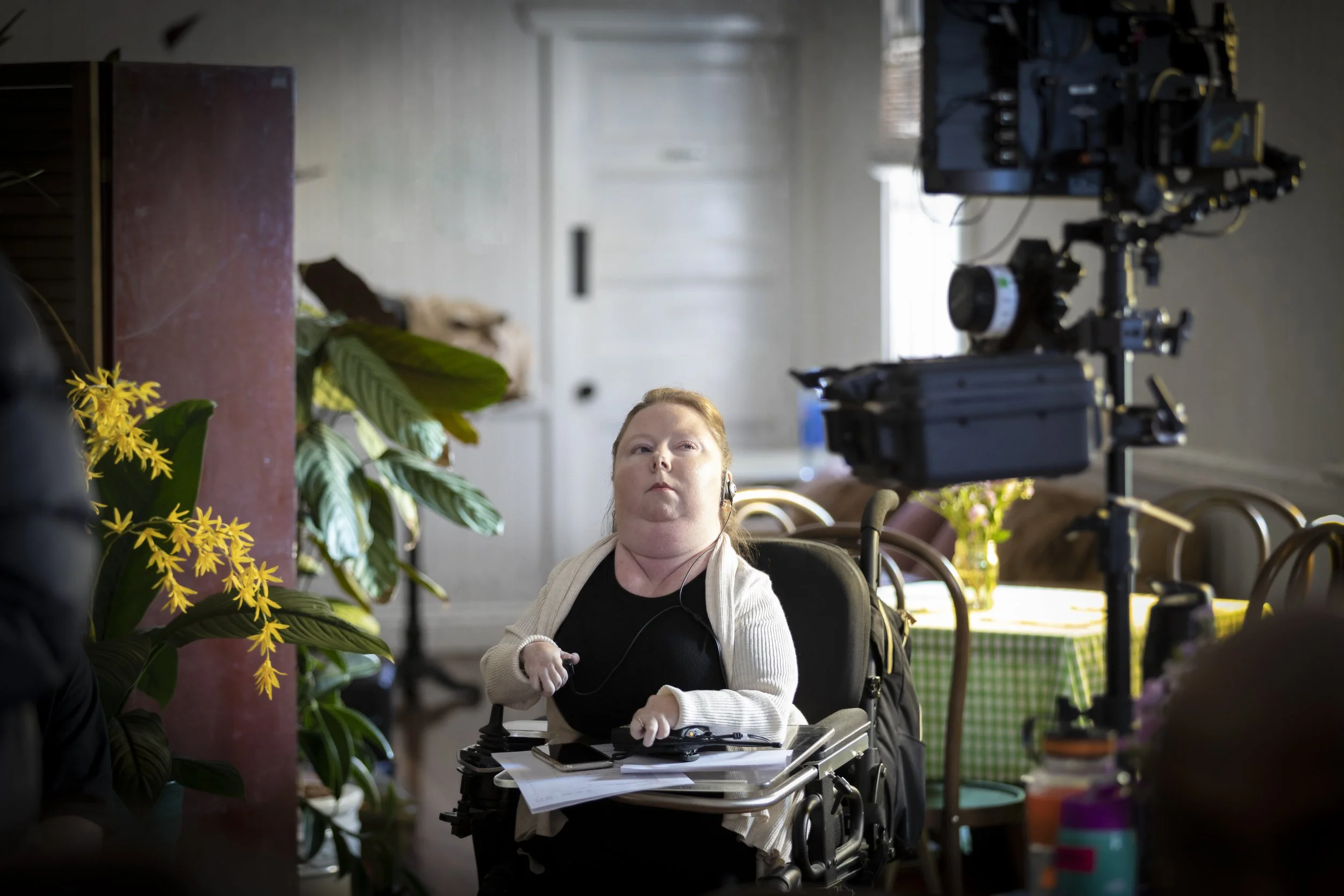
Stephanie Dower on the set of Sunshine.
“Who are you?”
Start with this: an access coordinator brings both screen industry experience and lived experience of disability. That combination is the whole point. It means we understand the realities of a shoot, the pace, the pressure, the way decisions get made under time and budget constraints, and we also understand what it's like to navigate the world as a disabled, D/deaf, and/or neurodivergent person. One without the other only gets you halfway there.
As a role, access coordination is still relatively new. It gained momentum out of the UK, particularly after screenwriter Jack Thorne's 2021 MacTaggart Lecture dubbed disability the industry's forgotten diversity, and it's since formalised through dedicated training pathways. The goal was straightforward: create a role whose job it is to build a safe working environment for disabled, D/deaf, and neurodivergent people on set. Think of it as similar in function to an intimacy coordinator, someone positioned between the above-the-line team and the cast and crew, there to navigate the power imbalance that can exist on a set even when everyone involved has good intentions. Good intentions don't prevent miscommunication, oversights, or the lack of a safe way for someone to share what they need. That's the gap an access coordinator fills, for the producer, the crew, and the cast alike.
“What do you do?”
This is probably the biggest sticking point, so let's be precise. We're not there to do anyone's job for them. An access coordinator is not the person who books the accessible toilets or reformats your call sheet into easy read. We advise, guide, and support. The work breaks down into three things we do well: identify, communicate, and support.
Identify. Through training and lived experience, we identify barriers before they cost you something. A barrier is anything that blocks someone from having a place on set, and it can take a few different shapes. Physical barriers, like stairs. Communication barriers, like a document that's incompatible with a screen reader. Attitudinal barriers, like a head of department who is unsure of how to work collaboratively with a disabled crew member. We go further than flagging the obvious ones too. We catch outdated language in script drafts, harmful portrayals in marketing materials, or a location that needs adjustments before everyone can participate. Catching it early is what can save you time, money, and reputation later.
Communicate. This is the core of the role. We're a safe space for your crew, cast, and you to disclose what's needed and ask the questions that feel hard to ask out loud. If you've hired any D/deaf, disabled, and/or neurodivergent crew or cast, and with more than 1 in 5 Australians having disability, you almost certainly have, we listen to what they require to do their job and take the burden of disclosure off their shoulders. We communicate their access requirements privately to producers, the production manager, or whoever needs to be made aware, and work toward a solution that fits both sides. Without that space, you may never know someone on your set is struggling to get what they need, because the industry still carries pressure to push through in silence. That pressure isn't something any one production created, but it is something an access coordinator can help dismantle, on your production, starting now. The same goes in reverse: if there's a question you're not sure how to ask, ask us first. We'll help you find the way to ask it well.
Support. Above all, we support your whole team in finding solutions that align with your budget and your schedule. Production is hard, full stop, and unlimited resources are not the reality anyone is working with. What we bring is a flexible approach to finding a workable path when the ideal one isn't available, and to do it without losing sight of what your cast and crew require.
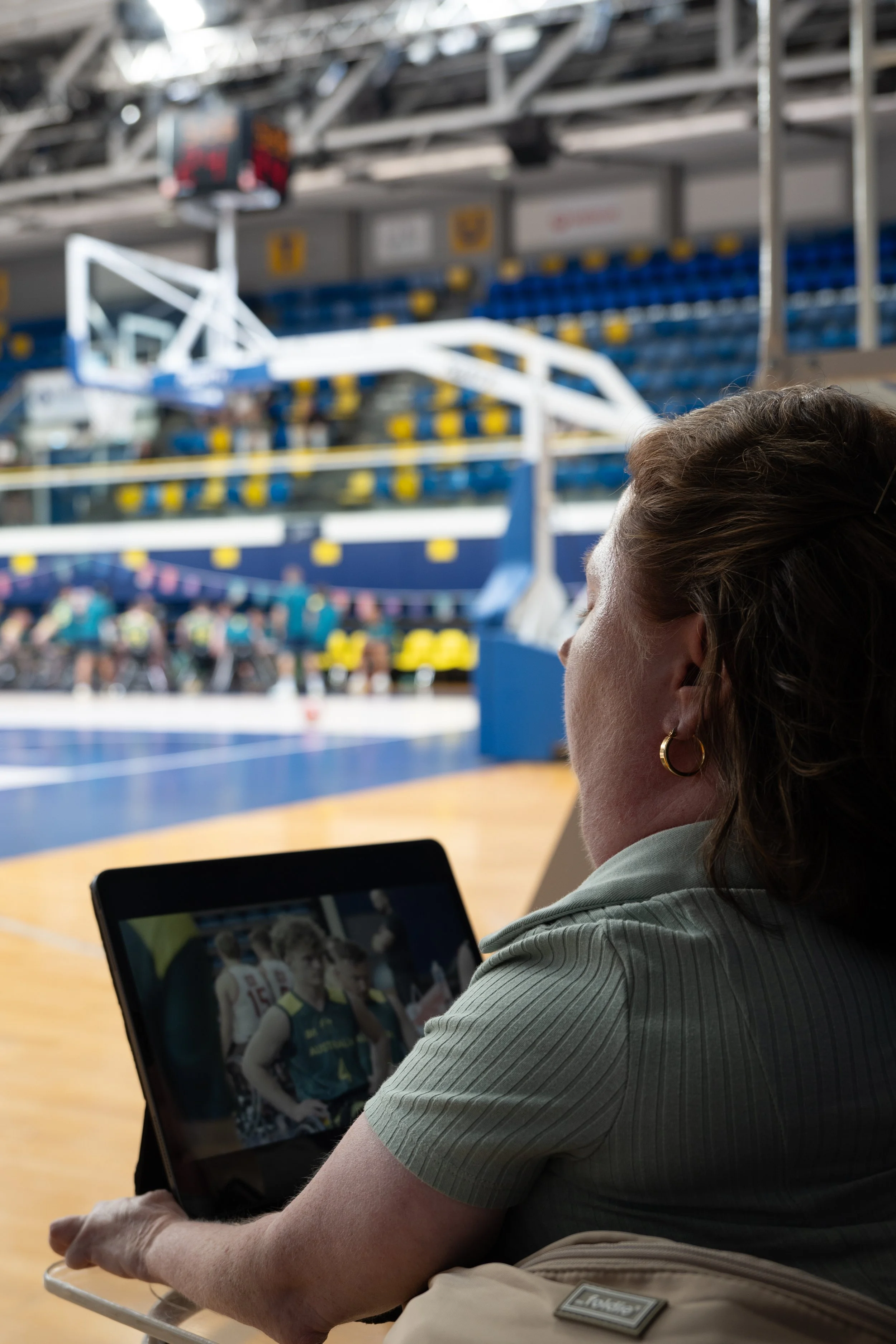
Stephanie Dower watches the Aussie Rollers on her monitor on the set of “Path to Paris.”
“When do we hire you?”
The honest answer is as early as possible. Remember that 1 in 5 statistic? Put it in real terms: out of a crew of one hundred, more than twenty are likely to be disabled, D/deaf, and/or neurodivergent. That's not a hypothetical, it's most productions, whether anyone's clocked it yet or not. Bringing an access coordinator on from development or pre-production means accessible, inclusive practice gets built into your workflow from day one, instead of bolted on after the fact. It also means you're not finding out on the first morning of the shoot that your art director needs support getting onto location, because someone should have known that weeks ago.
In fact, we're often contacted initially because a cast or crew member has disclosed an access need, and the production isn't quite sure what to do next. That's completely fine, and it's exactly what we're here for. We step in, work directly with that person to support their onboarding, help communicate what they need to the right people, and get them set up to do their job well on your set.
But here's the case for engaging us early. An access coordinator on board from the start doesn't just solve problems, it opens doors. It can mean a casting brief that speaks to the diversity of talent out there, or a crew that brings unique problem-solving abilities to set. There's a lot to gain from bringing us in before you need us, because things change fast on a production, and we know that better than most.
Just don't expect us to pick up the phone at 5am because your location scout forgot to mention today's set is only accessible by stairs. A mistake you never have to make again, if you bring us in early enough.
“Where do you work?”
Wherever you need us. This isn't a role reserved for big budget, international productions. An access coordinator can support a web series shot over a weekend just as readily as a multi-million dollar feature, because the role scales to the production, not the other way around. Every shoot is different, and just as importantly, every person's access requirements are different too. There's no one-size template here, which is exactly why the role must be flexible to do its job properly.
That flexibility extends to how we work, not just what we work on. Sometimes that means an access coordinator on the ground for the full shoot. Sometimes it means being on call, ready for when something comes up. Sometimes it's remote advice and guidance, with no one needing to be on set at all. Whatever shape your production takes, there's a way for access coordination to fit into it and make it better.
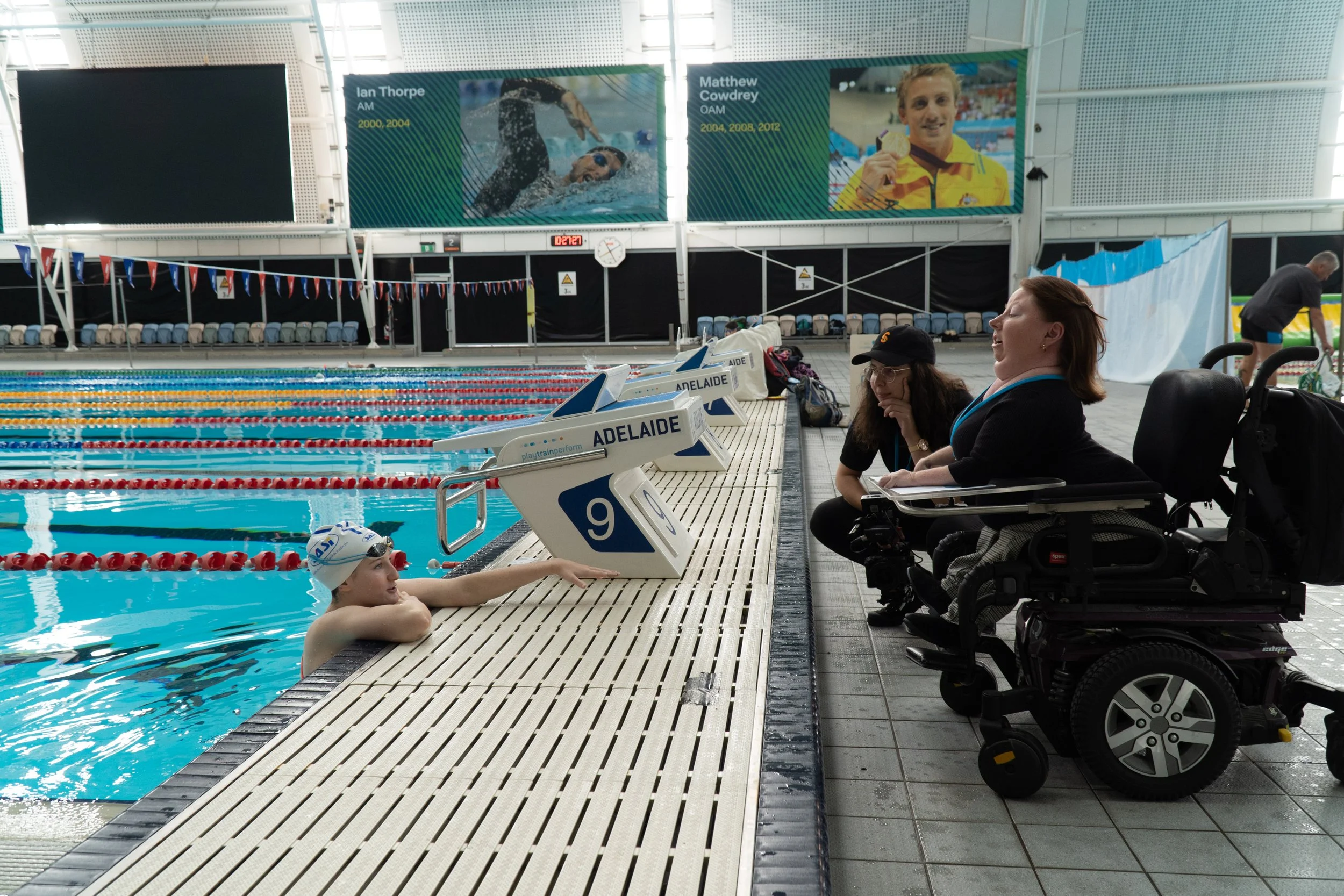
Stephanie Dower directing Paralympian Isabella Vincent on the set of Game Changers (2023).
“Why does this matter?”
If you've followed the Who, What, When and Where and you're still not sure about the Why, that's a fair place to be. I'm not going to throw statistics at you or make the case through guilt. The Why is something every production needs to come to on its own terms, and it comes down to what you value and what kind of creative collaboration you want to offer the people working with you.
What I will tell you is what's already happening. In the UK and US, access coordination has seen strong and growing uptake, because those markets have decided that the stories they tell should reflect the diversity of the world they're making them in. A Deaf lead. A wheelchair user who doesn't solely serve as inspiration. A neurodivergent director whose creative process doesn't fit the standard mould. None of that is box-ticking. It's an acknowledgement that human experience is wider than the screen has historically suggested, and that the people who live those experiences deserve to see themselves in it, and to be part of making it.
An access coordinator is what makes that possible in practice. We bridge the gaps, carry the load of the coordination so it doesn't fall on the people who are already doing the work of bringing a story to screen, and keep inclusion as a live, working reality rather than a line in a values statement. So that your cast can focus on the performance, and you can get back to the other hundred things on your plate.
Speaking from my own experience: a significant portion of my work right now comes from international productions filming here during Australia's current screen boom. International casts with access requirements, and foreign production companies who see access coordination as standard practice, are driving demand for the role here because they've already answered the Why for themselves. Our domestic industry is still growing.
As Australia attracts more productions, as the streamers face increasing mandates around representation, and as the industry looks seriously at what a sustainable, diverse future looks like, I want to put something plainly: if we want to make screen content that reflects the diversity of this country, every person working in it needs to understand their own Why. Why representation matters. Why access matters. And why the two are the same conversation.